
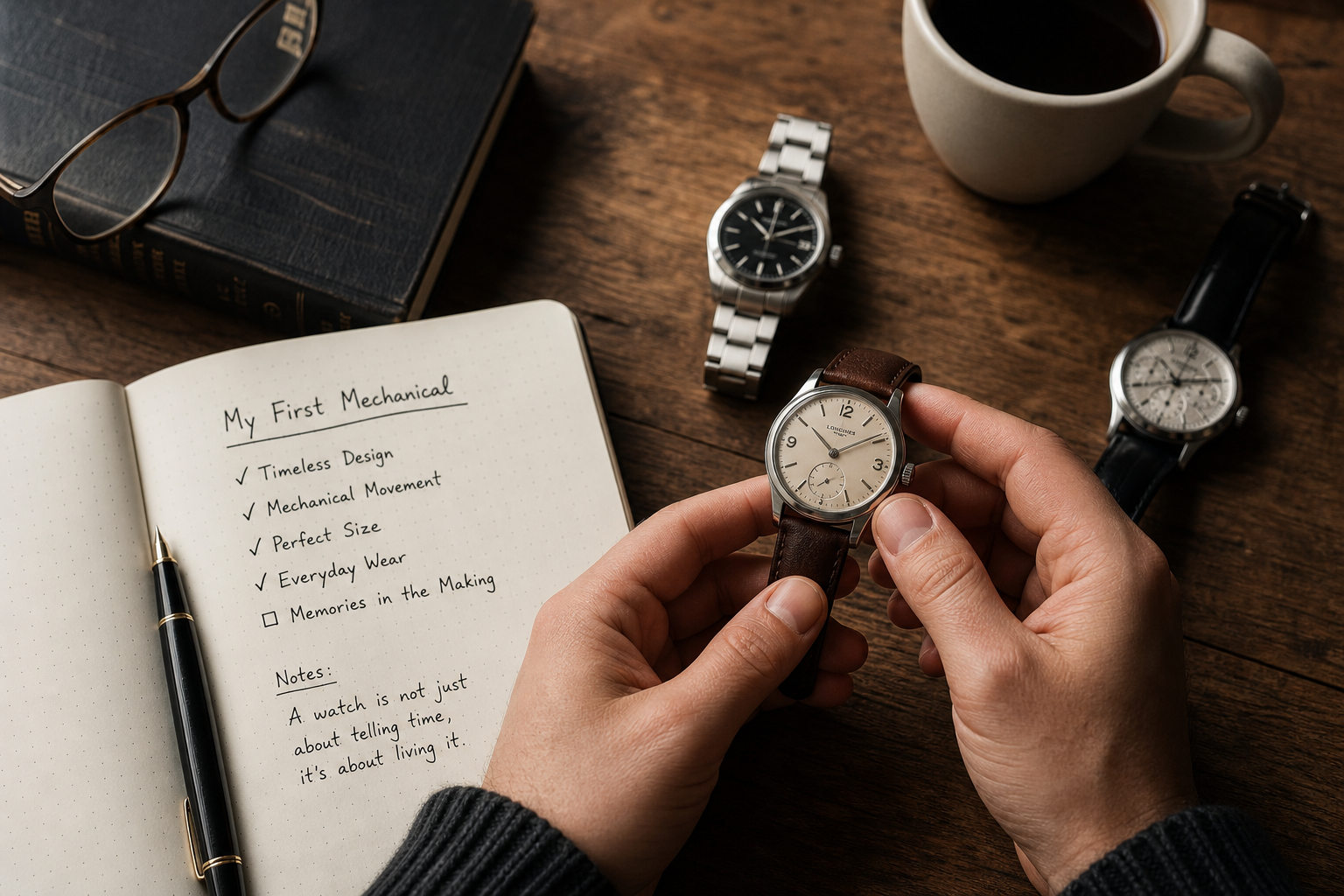
Your First Mechanical Watch in 2026: What Actually Matters
The mechanical watch market in 2026 offers more quality at accessible prices than at any point in recent memory. Microbrands, established manufacturers, and direct-to-consumer labels like oneplusone compete on transparency, movement reliability, and honest specifications rather than heritage alone. If you are ready to move beyond quartz accuracy or smartwatch notifications, your first mechanical purchase should feel exciting — not overwhelming.
This guide focuses on decisions that affect daily wear: how the watch feels on your wrist, whether the movement suits your routine, and whether the seller will still be there when you need a strap change or service five years from now. Spec sheets matter, but they are not the whole story.
Start With How You Will Actually Wear It
Before comparing calibres or debating dial colors, write down three scenarios where you will wear the watch most often. Office meetings, weekend errands, travel, gym-adjacent activities, and formal dinners each push you toward different case shapes, water resistance levels, and strap materials. A slim dress watch looks perfect under a shirt cuff but feels fragile on a hiking trail. A 42mm dive watch dominates a small wrist in photos yet may become your most-reached-for daily piece if you value durability and legibility.
oneplusone designs many entry collections with this versatility in mind — cases that transition from weekday to weekend without looking out of place. Your first watch does not need to do everything, but it should fail gracefully in none of your top three use cases.
Mechanical Basics Every First Buyer Should Know
A mechanical watch stores energy in a coiled mainspring, releases it through a regulated escapement, and displays time via gears driving the hands. No battery. No firmware. When it stops, you wind it or wear it — that is the entire power model.
Manual vs Automatic for Beginners
Manual watches require crown winding every day or two. Automatic watches wind themselves through a rotor moved by wrist motion. Most first-time buyers in 2026 choose automatic movements for convenience, especially if the watch will stay on the wrist five days a week. Manual movements appeal when you want a thinner profile, lower price at comparable quality, or a deliberate daily ritual.
Accuracy Expectations
Quality mechanical watches typically run within roughly minus ten to plus twenty seconds per day. That is normal. Chronometer certification tightens those tolerances but adds cost most beginners do not need on a first purchase. If a seller promises quartz-level accuracy from an uncertified mechanical movement, treat that claim with skepticism.
Specifications That Change Real-World Experience
Marketing copy loves big numbers. These four specifications most directly affect whether you enjoy the watch after the unboxing excitement fades.
| Specification | Why It Matters | Sensible First-Watch Target | Common Mistake |
|---|---|---|---|
| Case diameter | Visual balance on your wrist | 38–41mm for wrists under 17.5cm; 40–42mm above | Buying diameter without checking lug-to-lug width |
| Lug-to-lug | Overhang causes discomfort even at "safe" diameters | Lugs should not extend past wrist edges | Ignoring lug length in online-only purchases |
| Water resistance | Gasket integrity and crown design | 50m for desk-and-rain; 100m+ for swimming | Assuming 50m means safe pool swimming |
| Crystal type | Scratch resistance in daily contact | Sapphire when budget allows | Choosing coated mineral and expecting sapphire durability |
| Power reserve | How long it runs off-wrist | 40h minimum; 60–80h if you rotate watches | Expecting a 40h watch to survive a three-day weekend unworn |
Case Materials and Weight
Stainless steel remains the default for first mechanical watches in 2026 — corrosion resistant, repairable, and weight that signals quality without fatigue. Titanium and bronze appear at higher tiers; both require slightly different care expectations. Heft is not automatically better: a well-balanced 39mm steel watch often wears more comfortably than an top-heavy 44mm case with a long strap gap.
Straps and Bracelets
Leather dresses up; rubber and NATO straps handle sweat and travel; bracelets add longevity and a sportier look. Many oneplusone models ship with quick-release spring bars, making strap experiments inexpensive. For a first purchase, prioritize fit and clasp quality over having three straps in the box you will never use.
Budget Tiers in 2026: Where Value Actually Lives
Mechanical watches span enormous price ranges. For a first purchase, think in tiers rather than a single magic number.
Entry Tier ($150–$350 USD)
Expect reliable outsourced movements, mineral or entry sapphire crystals, and honest if simple finishing. Water resistance may be modest. This tier works when you want to confirm that mechanical ownership suits you before investing more.
Core Tier ($350–$800 USD)
This is where most informed first purchases land in 2026. Sapphire crystals, improved movements with longer power reserves, better lume, and stronger warranty support become standard. Brands like oneplusone concentrate competitive value here — transparent specs, service networks, and designs that do not feel like placeholders until your "real" watch arrives.
Enthusiast Tier ($800+ USD)
In-house movements, finer hand-finishing, and stronger secondary-market recognition enter the picture. Wonderful if you have handled enough watches to know your taste — but not required for a satisfying first experience.
Style Paths for First-Time Buyers
Three archetypes cover most first purchases without forcing you into a niche you will outgrow in six months.
The Everyday Field or Pilot Watch
High contrast dials, moderate case sizes, and straps that handle casual wear make field and pilot styles the safest generalist choice. They pair with denim, chinos, and most office environments without looking like costume pieces.
The Versatile Dive Watch
Even non-divers buy dive watches because the formula works: robust case, luminous markers, rotating bezel for timing espresso pulls or parking meters, and water resistance that forgives real life. You do not need ISO certification for desk duty, but you do need honest gaskets and a screw-down crown if you plan to swim.
The Dress-Casual Hybrid
Slim cases under 40mm with clean dials bridge formal and smart-casual wardrobes. Manual movements appear often here. Accept that hot showers, gym sessions, and beach days are poor matches — and that is fine if the watch fills a defined role.
Buying Smart: Channels, Authenticity, and Returns
Purchase from authorized retailers or the brand's official store when possible. Grey-market savings exist but may complicate warranty claims. Before checkout, confirm return window length, who performs warranty service, and whether the movement is serviced with standard parts or proprietary components that lock you to one repair center.
On delivery, inspect hand alignment, bezel click action, crown smoothness, and whether the crystal sits flush. Run the watch for forty-eight hours and note daily rate against your phone — large deviations on day one sometimes settle, but grinding noises or loose end links should not.
First-Week Ownership Habits
Set the time and date using the crown only when the second hand is not engaged if your manual recommends it — many movements prefer crown adjustments at low torque positions. Avoid placing the watch speaker-side on laptop lids or tablet covers; modern magnets are stronger than owners expect. If you will not wear an automatic watch for several days, either wind it manually before storage or accept a reset when you return.
Store unworn pieces in a dry environment away from direct sunlight that fades dials and degrades leather. You do not need a winder immediately; that purchase can wait until you own multiple automatics in rotation.
Building Taste Without Regret
Your first mechanical watch is a starting point, not a final identity statement. Buy for today's wrist and wardrobe, leave room to discover whether you prefer tool watches, dress pieces, or complications later. Forums and social feeds amplify hype cycles; your wrist and calendar are better guides.
When a brand publishes full movement specs, offers clear sizing diagrams, and stands behind service intervals with documented procedures — as oneplusone does across its 2026 collections — you reduce the risk that your first mechanical love story ends with a drawer orphan. Take your time, measure your wrist, and choose the watch you will actually reach for on Tuesday morning, not just the one that photographed best on someone else's arm.
How much should I spend on my first mechanical watch in 2026?
Most buyers find the best balance of reliability and features between $350 and $800 USD. Below that, verify movement sourcing and crystal type carefully. Above that, you pay for refinements that matter more to collectors than first-time owners.
Is automatic or manual better for a first purchase?
Automatic suits daily wear and irregular schedules. Manual suits thinner dress styles and owners who enjoy winding rituals. Neither is objectively superior — match the movement to how often the watch will sit in a drawer.
What case size fits a 17cm wrist?
Start with 38–40mm cases and check lug-to-lug under 48mm when possible. Diameter alone misleads; a compact 41mm can wear smaller than a long-lug 39mm.
Do I need Swiss Made on the dial?
No. "Swiss Made" indicates origin rules, not automatic quality. Japanese, Chinese, and European movements from transparent manufacturers can serve first buyers excellently if specs and service support are clear.
Can I shower with a 50m water-resistant watch?
Shower steam and temperature swings stress gaskets even when static pressure ratings look adequate. Remove the watch for hot showers; treat 50m as splash and rain protection, not swimming.
How long should my first mechanical watch last?
Decades with normal care and periodic servicing. Mechanical watches are repairable by design — another reason to buy from sellers who document parts availability.
Should my first watch be from oneplusone or a heritage luxury brand?
Heritage brands charge for history and resale badges. oneplusone and similar transparent labels often deliver stronger day-one value for first buyers who prioritize specs, warranty clarity, and versatile design over logo prestige.