
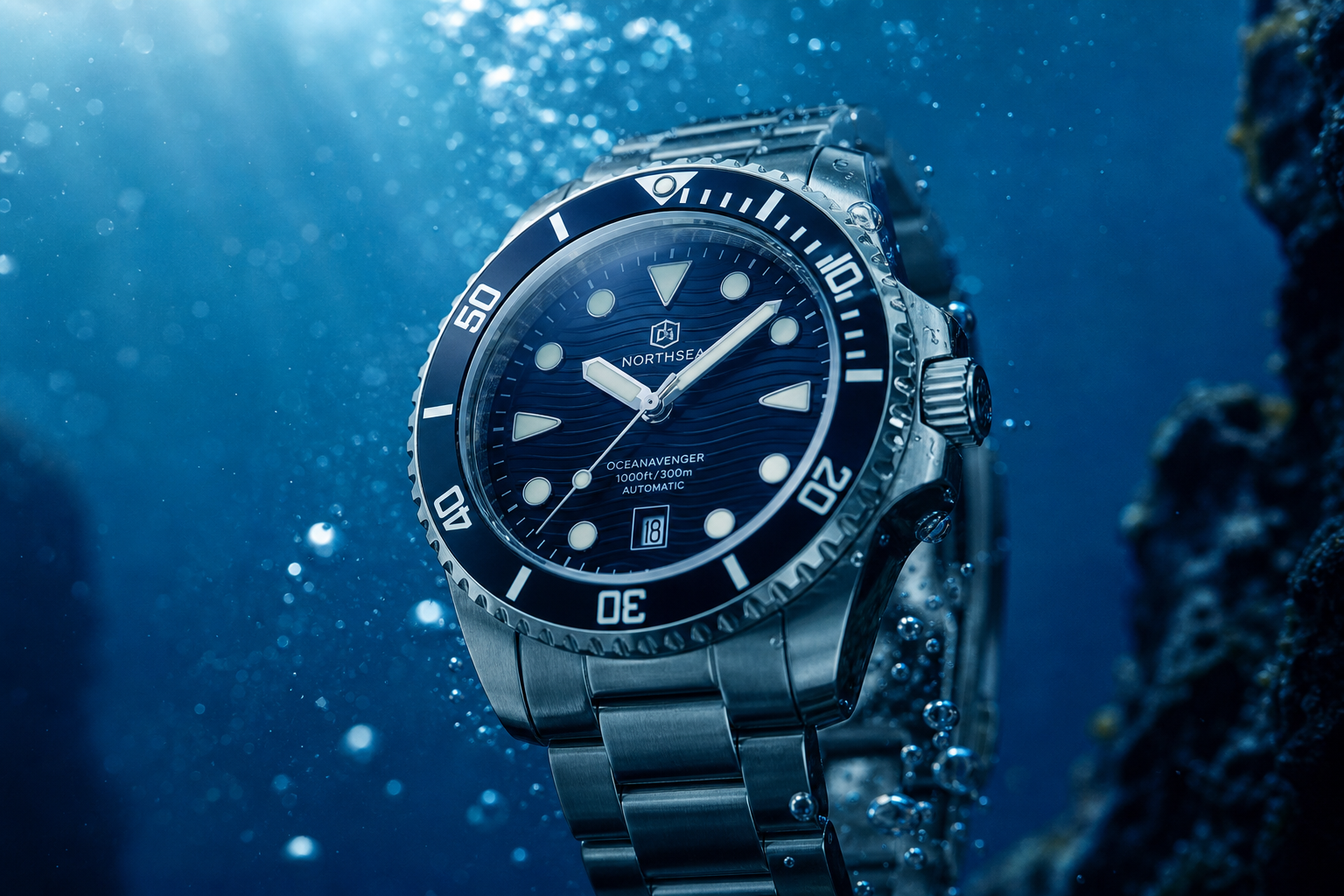
Dive Watch Water Resistance Explained for 2026
Water resistance is the specification most misunderstood in watch marketing — and the one most likely to cause expensive regret. A dial stamped "300m" suggests ocean-depth capability, yet that number describes laboratory static pressure, not the dynamic forces of swimming, shower steam, or crown adjustments underwater. If you own or plan to buy a dive-inspired watch from brands like oneplusone, understanding what water resistance actually guarantees separates confident daily wear from avoidable repair bills.
This 2026 guide explains rating systems, real-world limits, gasket maintenance, and how modern dive watches balance sport credibility with desk-duty practicality.
What Water Resistance Numbers Actually Measure
Watch water resistance ratings express maximum static pressure a case survives in controlled testing — typically measured in atmospheres (ATM), bars, or meters of water column equivalence. One ATM approximately equals 10 meters of static depth. Testing involves placing a dry case in a pressurized chamber; no movement of water, no temperature cycling, no crown manipulation during submersion.
Real life adds variables testing ignores: wrist motion increases pressure on seals, hot shower steam penetrates aging gaskets faster than cold water, and opening the crown underwater instantly defeats any rating regardless of the number on the dial.
Common Rating Tiers and Realistic Use
Manufacturers publish ratings on a scale that sounds generous until you map each tier to actual behavior.
| Rated Depth | Static Test Equivalent | Safe Daily Use | Not Recommended |
|---|---|---|---|
| 30m / 3 ATM | Minimal splash protection | Hand washing, light rain | Swimming, showering, any submersion |
| 50m / 5 ATM | Basic moisture barrier | Rain, accidental splashes | Swimming pools, snorkeling, crown in water |
| 100m / 10 ATM | Recreational swim threshold | Pool swimming, surface snorkeling | Deep diving, hot tub, crown underwater |
| 200m / 20 ATM | ISO dive watch entry zone | Recreational scuba, serious swim wear | Saturation diving without dedicated tool watch |
| 300m+ / 30 ATM+ | Professional dive margin | All recreational water sports | Assuming rating survives without service |
Why 50 Meters Is Not "Swim Safe"
Marketing language often implies 50-meter watches handle pools. Industry practice treats 50m as splash resistance — sufficient for rain and hand washing when gaskets are new, but not engineered for sustained submersion or dynamic pressure from arm strokes. If swimming is part of your lifestyle, 100 meters with a screw-down crown is the practical minimum in 2026.
ISO 6425 and What It Adds
True dive watches meeting ISO 6425 undergo additional testing: legibility at 25cm in darkness, shock resistance, saltwater exposure, and bezel operation under water. A watch can be water-resistant to 200 meters without ISO certification — many excellent oneplusone dive models prioritize honest construction over certification paperwork — but ISO marks indicate standardized testing beyond static pressure alone.
Components That Determine Water Integrity
Water resistance is a system, not a single gasket. Each component must cooperate.
Crown and Stem Seals
Pull-out crowns are the most common failure point. Screw-down crowns thread into the case tube, compressing seals before water contact. Never operate the crown underwater. After screwing down, verify gentle resistance — cross-threading damages threads and compromises sealing permanently.
Caseback and Crystal Gaskets
Screw-down casebacks compress O-rings more reliably than snap-back cases. Sapphire crystals require gaskets between crystal and case; mineral crystals use similar sealing but crack more easily under impact, which indirectly affects water integrity after drops.
Bezel and Pushers
Rotating bezels on dive watches include their own seals. Chronograph pushers, if present, add additional failure points — many serious dive watches omit pushers entirely for this reason. oneplusone dive collections emphasize screw-down crowns and solid caseback designs that reduce unnecessary ingress paths.
Dynamic Pressure: Why Swimming Stresses Watches Differently
Moving your arm through water creates localized pressure spikes exceeding static depth equivalents. Jumping into a pool, waterfall impact, and wave force apply shock loads gaskets must absorb repeatedly. This is why conservative interpretation of ratings matters: a 100-meter-rated watch handles recreational swimming when seals are fresh; pushing the same watch through years of chlorinated pools without service narrows that margin silently.
Enemies of Water Resistance Over Time
Gaskets are elastomer components that age. Heat, UV exposure, perfume, sunscreen, and chlorine accelerate degradation. Steam from hot showers penetrates micro-gaps that cold water might not — a leading reason manufacturers advise removing watches before showering regardless of rating.
Magnetism and Shocks
Heavy impacts can micro-shift case components, breaking seal compression. While magnetism does not directly affect gaskets, dropped watches often suffer combined damage — crystal stress plus case misalignment — that manifests as fog under the crystal months later.
Maintenance Schedule for Water-Ready Watches
Water resistance is not permanent. Plan gasket inspection and pressure testing every two to three years for watches worn in water regularly, and every five years for desk-only dive styles. After battery or movement service on watches you swim with, always request pressure verification — opening the case disturbs seals.
oneplusone publishes recommended service intervals for each dive model in its 2026 catalog, including guidance on when to replace crown tube O-rings after heavy saltwater use. Following manufacturer schedules costs less than movement corrosion repair.
Buying a Dive Watch in 2026: Practical Checklist
Match the watch to your actual water exposure, not aspirational diving plans.
Desk Diver (Occasional Rain and Hand Washing)
100-meter rating with screw-down crown provides ample margin. Prioritize legibility, bracelet comfort, and bezel action over extreme depth numbers you will never test.
Regular Swimmer
200-meter construction, screw-down crown, robust lume, and rinse-after-swim habit. Consider rubber or NATO straps that dry faster than padded leather.
Recreational Scuba
200 meters minimum with verified gasket quality, unidirectional bezel, high-contrast dial, and documented service network. ISO 6425 certification adds confidence but is not the only quality signal.
After Exposure: Rinse and Inspect
Freshwater rinse after chlorinated pools or saltwater removes corrosive residue from case gaps and bracelet links. Pat dry and inspect for fog under the crystal within twenty-four hours — early detection prevents movement damage. If moisture appears, stop wearing the watch in water and send it for service immediately; running a wet movement accelerates rust.
Water resistance is a maintainable capability, not a permanent superpower. Treat ratings as starting points, respect gasket aging, and choose dive watches from transparent brands that explain testing standards honestly. A well-built oneplusone diver worn within realistic limits delivers decades of confident wear — on land and in the pool alike.
Can I swim with a 50m water-resistant watch?
Industry guidance treats 50m as splash resistance, not swim safe. For regular swimming, choose at least 100m with a screw-down crown and fresh gaskets.
Does showering damage water-resistant watches?
Hot steam and temperature swings stress gaskets even when static ratings seem adequate. Remove your watch before hot showers to extend seal life.
What is the difference between bar and ATM?
Bar and ATM are nearly equivalent pressure units in watch labeling. 10 bar approximately equals 10 ATM or 100-meter static test equivalence.
How often should dive watch gaskets be replaced?
Every two to five years depending on water exposure frequency. Watches worn in saltwater or pools benefit from more frequent inspection.
Is ISO 6425 certification required for a good dive watch?
No. Many quality watches exceed recreational needs without formal certification. ISO marks standardized testing; honest construction and service support matter equally.
Why did my watch fog after swimming if it is rated 200m?
Fog indicates seal compromise — aged gaskets, impact damage, or crown operation near water. Stop water exposure and service the watch promptly.
Do oneplusone dive watches need special care after ocean use?
Rinse with fresh water, dry thoroughly, and follow the brand's published service intervals. Salt accelerates gasket and bracelet corrosion if residue remains.