
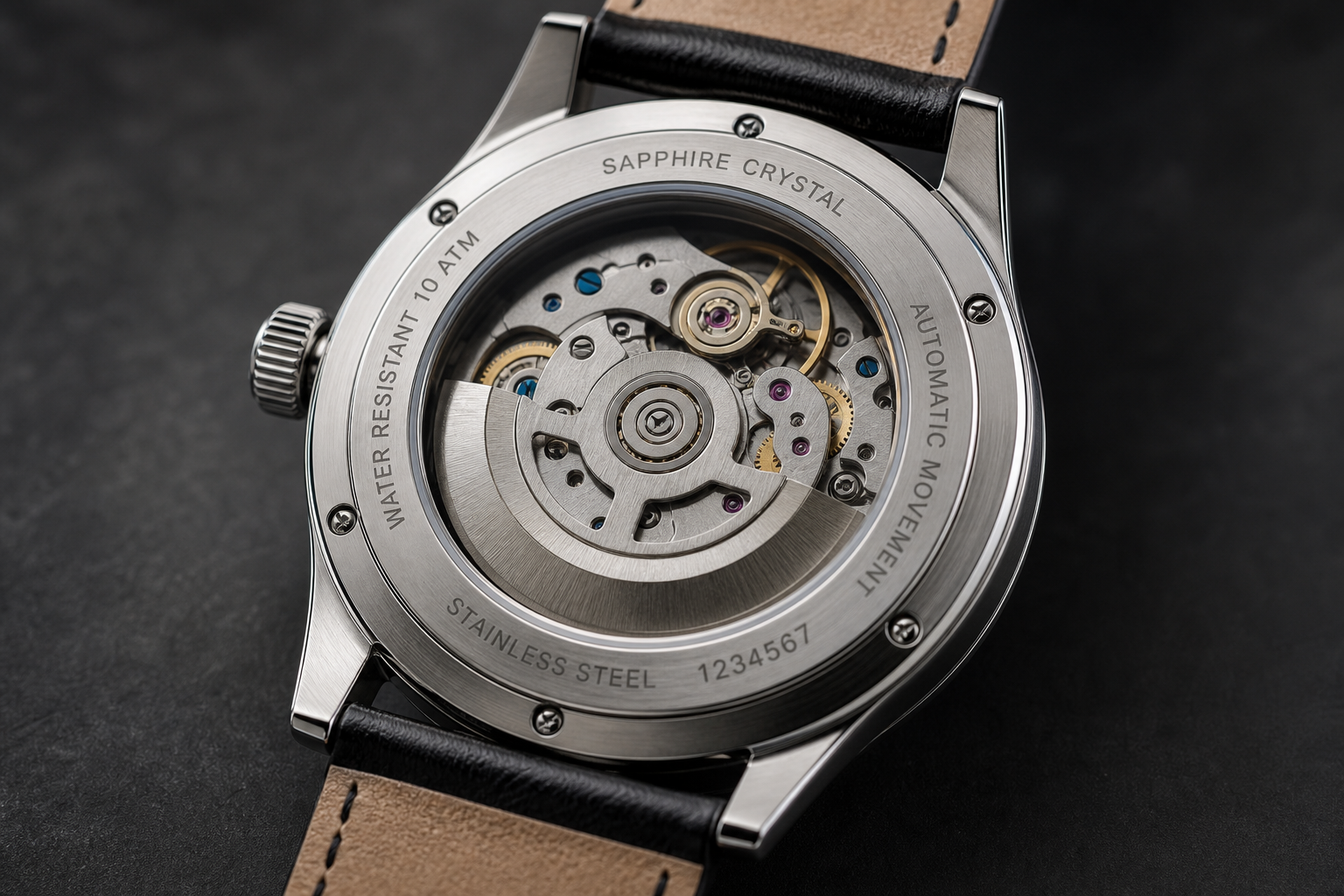
Mechanical Watch Accuracy in 2026: Daily Rate, COSC, and What the Numbers Mean
Mechanical watch accuracy sits at the intersection of engineering pride and owner anxiety. Forums amplify stories of plus-two-second-per-day wonders and minus-thirty-second disappointments in equal measure. In 2026, transparent brands like oneplusone publish stated daily rate ranges alongside movement calibres — a welcome shift from vague " Swiss quality" claims. Still, most owners do not know whether minus twelve seconds per day is acceptable, what COSC actually tests, or why their watch runs differently on a desk than on a weekend hike.
This guide demystifies accuracy specifications, certification tiers, and the habits that keep your mechanical watch within its designed tolerance — without treating every deviation like a factory defect.
What Daily Rate Means on a Mechanical Watch
Daily rate measures how many seconds a watch gains or loses over twenty-four hours compared to a reference time source — typically an atomic clock or networked smartphone corrected to UTC. A rate of plus eight seconds per day means the watch runs eight seconds fast over a full day. Minus eight means eight seconds slow. Rate is usually measured with the watch in a single position — dial up on a timing machine — which is only one of many positions your wrist experiences.
Mechanical movements are not electronic oscillators. They depend on metal springs, lubricated pivots, temperature expansion, and positional gravity on the balance wheel. Variation is inherent, not a sign of failure unless it exceeds manufacturer tolerance or changes suddenly without cause.
Typical Accuracy Ranges in 2026
Marketing rarely repeats what service centers tell you daily: most quality mechanical watches live between minus ten and plus twenty seconds per day uncertified. That range covers mainstream outsourced movements from Miyota, Sellita, and Seiko Instruments, as well as tuned calibres in mid-tier integrated brands.
Standard Grade Movements
Factory specifications often cite minus twenty to plus forty seconds per day across all positions — a wide envelope ensuring nearly every unit passes QC. Real-world owners frequently see tighter performance without adjustment, especially after a wearing-in period of weeks.
Elaboré and Premium Adjusted Grades
Some manufacturers offer upgraded regulation — minus ten to plus fifteen or similar — without full chronometer certification. oneplusone specifies stated ranges on several 2026 automatic lines, letting buyers compare models before purchase rather than discovering performance after unboxing.
Chronometer Certified (COSC and Equivalents)
COSC (Contrôle Officiel Suisse des Chronomètres) tests complete movements in five positions at three temperatures. The standard most quoted: average daily rate minus four to plus six seconds per day, with additional limits on mean variation and greatest deviation across positions. Passing COSC is meaningful — but a uncertified well-regulated movement can outperform a certified one that sits at tolerance extremes.
COSC and Other Certification Standards Explained
Certification is not magic — it is standardized testing with documented thresholds. Understanding what each label tests helps you decide whether the premium is worth your use case.
| Standard | What Is Tested | Typical Daily Rate Limit | Who Should Care |
|---|---|---|---|
| COSC (Switzerland) | Uncased movement, 5 positions, 3 temperatures, 15 days | Average −4 to +6 s/day | Buyers wanting documented precision and resale signaling |
| METAS Master Chronometer | Cased watch, magnetic resistance, water resistance, COSC base | 0 to +5 s/day after magnet exposure | Owners near laptops, phones, and magnetic clasps daily |
| Grand Seiko Standard | In-house criteria, often stricter than COSC | Varies by calibre; often −3 to +5 s/day | Enthusiasts of specific manufacture lines |
| Manufacturer in-house spec | Brand-defined, may include cased testing | Varies widely | Compare published numbers across models before buying |
| No certification | Factory QC only | Often −10 to +20 s/day in practice | Daily wearers syncing weekly with phone time |
Why Your Watch Differs From the Spec Sheet
Factory timing often occurs dial-up on a machine. On your wrist, crown-left and crown-right positions dominate. Temperature swings from air conditioning to summer sidewalks shift metal dimensions microscopically. Magnetism from speakers and phone cases can push a plus-five watch to plus twenty-five overnight. The spec is a laboratory snapshot — your wrist is a moving, magnetic, temperature-variable environment.
Positional Variance and Isochronism
Positional error is the rate difference when the watch moves from dial-up to crown-down, dial-down, or crown-up. A movement well adjusted in multiple positions shows smaller spread — desirable but labor-intensive at manufacture. Isochronism describes whether the watch maintains consistent rate as the mainspring unwinds from full to low power. Poor isochronism shows as accelerating drift late in the power reserve cycle.
If your watch gains ten seconds dial-up but loses five crown-down, daily wrist time may average near zero — or may not, depending on how you sleep and sit. Tracking rate in two positions at home explains more than a single timing machine printout from a forum stranger.
How to Measure Accuracy at Home
You do not need professional equipment for useful data. Sync the watch to an atomic phone time source, wait forty-eight to seventy-two hours without adjusting the crown, then compare again. Divide total deviation by days for approximate daily rate.
Apps and Timing Tools
Microphone-based timing apps listen to tick rate and estimate daily variance. Accuracy improves with quiet environments and consistent placement. Dedicated timegrapher devices cost under $150 USD in 2026 and show beat error and amplitude — metrics that help watchmakers diagnose issues beyond simple rate.
When to Stop Measuring and Start Servicing
Gradual drift within known tolerance is normal. Sudden jumps of thirty-plus seconds per day, stuttering seconds hand movement, or rate that changes after every elevator ride suggest magnetization or shock damage — service or demagnetization, not forum regulation advice.
Factors That Degrade Accuracy
Ownership habits matter as much as factory regulation.
Magnetism
Modern permanent magnets in phones, tablets, and bag clasps can magnetize balance springs instantly. Symptoms include dramatically fast or slow rate and poor amplitude on a timegrapher. Demagnetizers fix most cases in seconds without opening the case.
Shock and Impact
Dropping a watch or hitting it against door frames can bend the hairspring or shift the balance staff. Rate changes abruptly and may not self-correct. Incabloc and similar shock systems help but are not invincible.
Lubrication Age
As oils dry or migrate over five to eight years, friction increases and rate drifts. Regular service restores both accuracy and longevity. oneplusone publishes recommended service intervals — follow them before rate becomes a complaint rather than a maintenance reminder.
Power Reserve State
Many watches run slightly faster at low power or slightly slower at full wind. If you only wear an automatic two days per week, inconsistent winding may look like accuracy problems when it is actually power-state variance.
Should You Pay Extra for COSC in 2026?
Chronometer certification adds cost for testing, documentation, and marketing. Worth it if you enjoy the precision hobby, resell watches and want recognized badges, or simply want tighter guaranteed tolerance. Less critical if you reset from your phone weekly and wear the watch for style and mechanics rather than chronometry bragging rights.
oneplusone and comparable brands often deliver excellent uncertified daily performance — sometimes rivaling COSC averages — at lower price points by investing in movement sourcing and regulation rather than third-party testing fees. Read published rate ranges and owner reports for the specific calibre, not just the certification logo on a competitor's dial.
Setting Realistic Expectations
A mechanical watch is not a quartz reference clock. Minus fifteen seconds per day equals roughly four minutes per month — acceptable for many owners who sync monthly. Plus five seconds per day is roughly two and a half minutes per month fast — many collectors would celebrate that performance uncertified.
Choose tolerance expectations before purchase. If plus-or-minus two seconds daily matters for your personality or profession, budget for certified or premium adjusted movements and accept higher servicing standards. If you care more about craftsmanship, design, and a living mechanism on your wrist, standard mechanical tolerance fits modern life perfectly when you understand the numbers.
What is a good daily rate for a mechanical watch?
Between minus ten and plus twenty seconds per day is normal for quality uncertified movements. COSC-certified watches target average rates between minus four and plus six seconds per day under lab conditions.
What does COSC certification mean?
COSC tests uncased Swiss movements over fifteen days in five positions and three temperatures. Passing confirms the movement meets strict average rate and variation limits — it does not guarantee identical performance on your wrist.
Why did my watch suddenly run very fast?
Sudden fast rate often indicates magnetization from phones, laptops, or magnetic clasps. A watchmaker or demagnetizer tool usually resolves this without movement disassembly.
Is minus twenty seconds per day acceptable?
It falls within many factory specifications but feels noticeable over a week. If new, ask the seller about warranty adjustment. If gradual over years, service may be due.
Do automatic watches keep time better than manual?
Accuracy depends on movement grade and regulation, not winding type. Automatics maintain more consistent power if worn daily; manual watches may show more variance if wound inconsistently.
How often should I check my watch accuracy?
Monthly comparison against a reliable time source is enough for most owners. Daily obsession is optional unless you are regulating the movement yourself.
What accuracy does oneplusone specify for its 2026 movements?
oneplusone publishes stated daily rate ranges per calibre on product pages — typically competitive with standard premium adjusted grades. Check individual model specifications for exact numbers.