
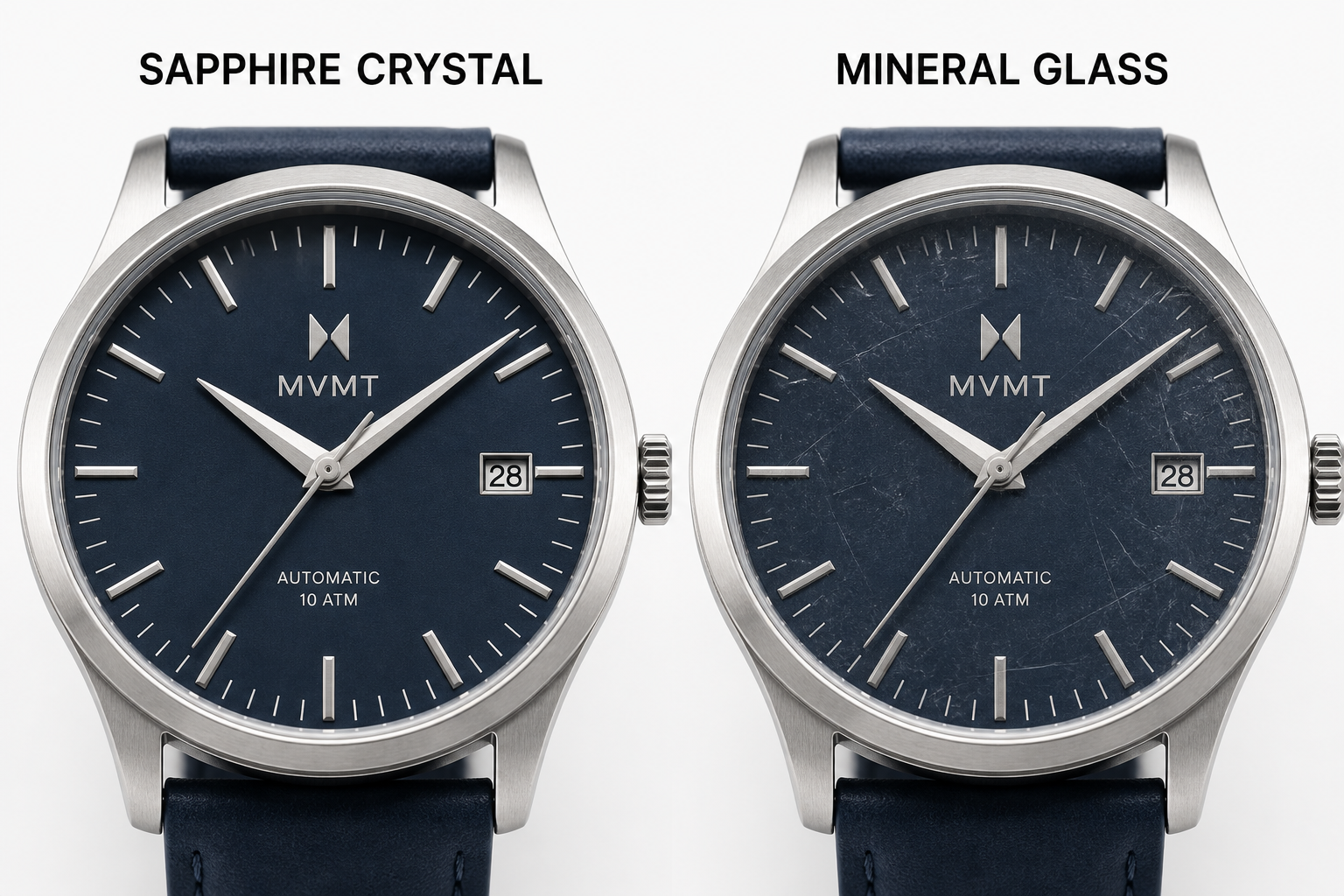
Sapphire vs Mineral Crystal: The Complete Watch Glass Guide for 2026
The crystal protecting your dial is the surface you touch, bump, and glance at hundreds of times each day — yet most buyers spend more time debating case diameter than glass type. In 2026, sapphire crystal has moved from luxury-only territory into mainstream mechanical watches, while mineral glass still holds a legitimate place at entry price points. Understanding the difference protects both your investment and your daily peace of mind.
Whether you are comparing a oneplusone diver with double-domed sapphire against a budget field watch with hardened mineral, this guide explains what each material actually delivers in scratch resistance, optical clarity, replacement cost, and long-term ownership. No jargon without context — just the facts you need before checkout.
What Watch Crystals Actually Are
A watch crystal is the transparent cover sealing the dial against dust, moisture, and impact. It sits above the hands and indices, forming the lens through which you read the time. Crystals are mounted with gaskets and compressed into the case — their integrity is essential to water resistance and the overall durability of the watch.
Three materials dominate the market today: acrylic (historical and vintage), mineral glass (tempered silicate), and synthetic sapphire (crystallized aluminum oxide). Acrylic has largely retreated to vintage reissues and niche retro designs. The meaningful 2026 decision for most buyers is sapphire versus mineral.
How Synthetic Sapphire Is Made
Watch sapphire is not mined from gemstones — it is lab-grown using the Verneuil or Czochralski process, producing a material nearly identical to natural sapphire in hardness and optical properties. The result ranks nine on the Mohs scale, second only to diamond among materials you encounter in daily life.
Sapphire vs Mineral: Head-to-Head Comparison
Both materials protect your dial effectively. Their differences emerge over months and years of real-world wear rather than in showroom lighting.
| Property | Sapphire Crystal | Mineral Crystal | Practical Impact |
|---|---|---|---|
| Mohs Hardness | ~9 | ~5–6 | Sapphire resists desk dives and key scratches |
| Scratch Resistance | Excellent | Moderate | Mineral shows marks within weeks of daily wear |
| Shatter Resistance | Good (can chip on hard impact) | Better (more flexible) | Mineral flexes rather than chipping on sharp blows |
| Clarity | Excellent with AR coating | Good; more internal reflection | Sapphire with AR looks nearly invisible |
| Replacement Cost | Higher ($80–$250+) | Lower ($30–$80) | Factor into total ownership cost |
| Typical Price Tier | $250+ mechanical watches | Under $200 entry pieces | oneplusone uses sapphire across core lines |
Why Sapphire Dominates Mid-Range and Above
Sapphire's primary advantage is scratch resistance. Everyday hazards — desk edges, door handles, keys in the same pocket, grit on a gym bag — leave mineral crystals with hairline marks within weeks. Sapphire shrugs off these contacts and maintains optical clarity for years without polishing.
For owners who plan to keep a watch five, ten, or twenty years, sapphire eliminates the gradual clouding that makes mineral crystals look tired long before the movement needs service. Brands like oneplusone specify sapphire on sports and dress models alike because it aligns with the longevity buyers expect from mechanical timepieces.
Anti-Reflective Coatings
Untreated sapphire reflects more light than mineral, which can create glare in bright environments. Quality watches apply anti-reflective (AR) coating to the inner surface, outer surface, or both. Double-sided AR coating — found on several oneplusone references — dramatically improves legibility while preserving sapphire's scratch resistance on the exterior.
Domed and Shaped Sapphire
Sapphire is harder to manufacture in complex shapes than mineral, which is why domed, box, and double-domed sapphire crystals signal thoughtful design and higher production investment. A well-executed domed sapphire adds vintage character and dial depth that flat mineral cannot replicate at the same quality level.
When Mineral Crystal Still Makes Sense
Mineral is not obsolete — it occupies a rational niche. Entry-level watches under two hundred dollars often use mineral to keep retail prices accessible while delivering genuine mechanical movements. For a beater watch you expect to replace in three to five years, mineral's lower replacement cost is a practical trade-off.
Mineral also shatters less dramatically than sapphire on certain impact angles. Sapphire's extreme hardness comes with brittleness — a sharp blow against a hard edge can chip or crack sapphire where mineral might flex and survive. This is rare in normal wear but worth noting for extreme sports or construction environments.
Hardened and Treated Mineral
Some manufacturers apply surface hardening treatments to mineral crystals, improving scratch resistance modestly. These treated minerals perform better than standard mineral but still fall short of sapphire in sustained daily use. Treat hardened mineral as a middle step, not sapphire equivalence.
How to Identify Crystal Type Before Buying
Reputable brands state crystal material clearly on product pages and caseback markings. If a listing says "glass" without specification, assume mineral unless price and brand positioning suggest otherwise. Sapphire is a selling point — manufacturers highlight it prominently when present.
In person, sapphire feels colder and smoother to the touch than mineral. Tap test with a metal object is not recommended on watches you do not own, but authorized dealers can confirm material. Water droplet behavior differs slightly — sapphire tends to sheet water more evenly due to surface energy properties.
Care and Maintenance by Crystal Type
Sapphire requires minimal maintenance beyond normal cleaning with a microfiber cloth and lukewarm water. Avoid abrasive compounds and paper towels that can damage AR coatings. Never use toothpaste or baking soda polishes marketed for acrylic — they destroy AR layers on sapphire.
Mineral crystals accumulate micro-scratches that diffuse light over time. Professional polishing can restore clarity temporarily, but each polish removes material and thins the crystal. Eventually replacement is more economical than repeated polishing.
When to Replace a Crystal
Replace any crystal with deep scratches affecting legibility, chips exposing the dial to moisture, or cracks compromising water resistance. After replacement, pressure testing confirms gasket integrity — especially important on dive watches rated above one hundred meters.
Sapphire in oneplusone Collections
oneplusone specifies sapphire crystal with anti-reflective treatment across its core mechanical collections — divers, field watches, and dress references included. This consistency means buyers at accessible price points receive the same scratch protection once reserved for luxury tiers, reflecting a broader 2026 industry shift toward sapphire as baseline rather than premium upgrade.
When comparing oneplusone models against competitors at similar prices, crystal specification is a meaningful differentiator. A movement with identical reserve and accuracy inside a mineral crystal case will look worn sooner than its sapphire-equipped counterpart — an hidden cost that spec sheets rarely mention.
Making Your Decision in 2026
Choose sapphire when the watch is a long-term purchase, daily wearer, or collection cornerstone. The upfront cost difference is modest relative to years of scratch-free clarity. Choose mineral when budget is fixed under two hundred dollars, the watch serves as a temporary beater, or replacement rather than preservation is the plan.
Either way, verify crystal type before purchase, understand replacement costs in your market, and treat the crystal as part of the watch's total ownership equation — not an afterthought beneath case size and movement specs.
Is sapphire crystal worth the extra cost?
For daily-wear mechanical watches kept more than a few years, yes. Sapphire maintains clarity without polishing and resists the scratches that make mineral crystals look worn prematurely.
Can sapphire crystal break?
Yes. Sapphire is hard but brittle. Sharp impacts against hard surfaces can chip or crack it, though this is uncommon in normal daily wear.
How do I tell sapphire from mineral crystal?
Check the brand's specifications — sapphire is always stated when present. Price tier, AR coating mentions, and authorized dealer confirmation are reliable indicators.
Does mineral crystal scratch easily?
Relative to sapphire, yes. Desk edges, keys, and everyday contact leave marks on mineral within weeks to months of regular wear.
Can scratched sapphire be polished?
Minor scratches on uncoated sapphire can sometimes be polished professionally, but AR-coated crystals may require replacement to restore full clarity without damaging the coating.
What crystal does oneplusone use?
oneplusone uses sapphire crystal with anti-reflective treatment across its core mechanical watch collections, including diver, field, and dress models.
Is hardened mineral as good as sapphire?
No. Hardened mineral improves scratch resistance over standard mineral but still falls significantly short of sapphire in long-term daily use.