
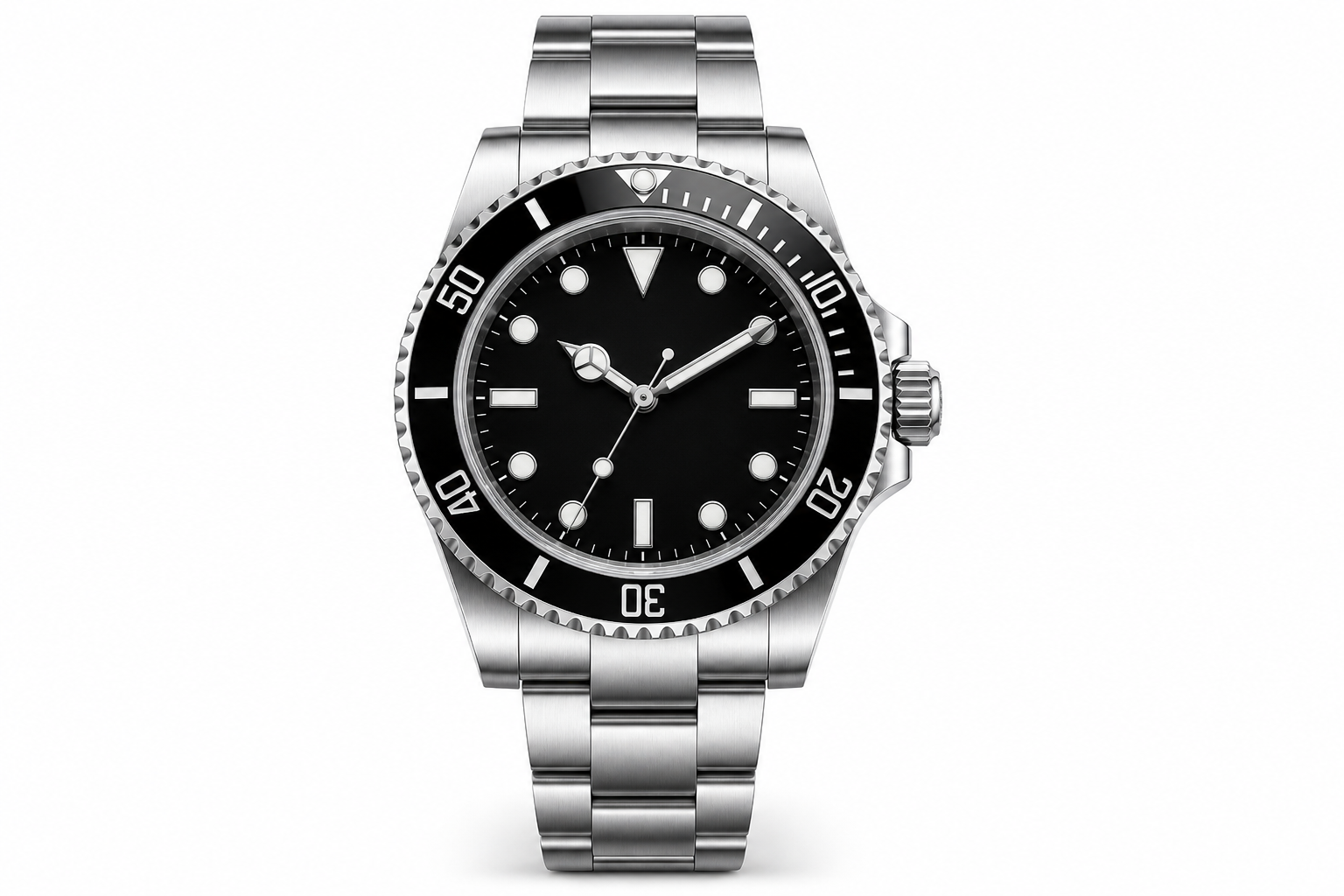
Watch Lume Guide 2026: Luminova, Dial Glow, and Night Readability
Luminous dial material turns a mechanical watch from a daytime accessory into a usable tool after dark. Whether you are checking time during a red-eye flight, timing a predawn dive, or simply reading the dial from bed without phone glare, lume quality separates watches that work at night from those that merely exist. In 2026, Super-LumiNova and similar strontium aluminate photoluminescent pigments dominate the market — safe, bright, and rechargeable by any light source.
This guide explains how modern lume works, how it is applied, what performance to expect, and how to evaluate lume when buying a dive watch, field watch, or daily oneplusone piece built for low-light legibility.
How Modern Watch Lume Works
Photoluminescent lume stores energy from ambient light and releases it slowly as visible glow. Unlike historic radium and tritium, modern pigments contain no radioactive material — they are safe to wear and handle indefinitely. Super-LumiNova, a branded strontium aluminate compound from RC Tritec, appears on the majority of quality watches in 2026 under various grade names: Standard, Grade A, Grade X1, and color variants like BGW9 (blue-white) and C3 (green).
Charge time, initial brightness, and afterglow duration depend on pigment grade, application thickness, and whether lume sits on hands, indices, bezel inserts, or fully fledged dial plots.
Super-LumiNova Grades and Colors
Not all LumiNova performs equally. Manufacturers choose grades based on cost, dial design constraints, and marketing claims about "long-lasting glow."
Standard vs High-Performance Grades
Standard grades offer adequate glow for casual night checks — bright initially, fading noticeably within an hour in total darkness. Grade X1 and similar high-performance variants maintain readable glow longer and charge faster under weak light. The difference matters for divers checking elapsed time on bezels during night dives; it matters less for office workers who glance at a dim bedroom once before sleep.
Color Choices and Perceived Brightness
C3 green appears brightest to human night vision — why military and dive watches historically favored green-yellow tones. BGW9 blue-white looks cooler and matches modern dial aesthetics but often appears dimmer at the same pigment volume. Orange and old-radium faux patina lume prioritize style over maximum photon output. Choose color for legibility priority versus vintage appearance.
Application Methods That Change Performance
Identical pigment applied differently yields different results. Understanding application helps decode marketing photos that always show fully charged lume.
Printed vs Applied Indices
Some dials print lume flat on the surface — cheap to produce but thin and less bright. Applied metal indices with lume-filled recesses or separate luminous inserts add depth and volume, increasing glow reservoir. Faceted indices with lume on multiple planes catch light from more angles during charging.
Hands: Solid Fill vs Partial Lume
Skeleton hands with thin lume strips look elegant in daylight but underperform solid paddle hands filled edge to edge. Syringe hands concentrate lume in cylindrical caps — excellent for field watches. Mercedes hands on dive watches combine large lume areas with distinctive silhouettes; alignment of lume plots to indices at midnight separates thoughtful design from template dials.
Bezel Insert Lume
A glowing pip at zero supports dive timing orientation. Full luminous bezel scales exist but are rare due to cost and uneven wear. Pearl quality — the luminous dot — should be centered, domed for charging angle, and matched in color temperature to dial lume for cohesive night reading.
Lume Performance Expectations in 2026
| Application | Initial Brightness | Readable After 1 Hour | Charge Requirement | Typical Watch Type |
|---|---|---|---|---|
| Thin printed indices | Moderate | Weak — barely visible | Strong direct light | Entry fashion, dress |
| Standard applied plots | Good | Moderate — time readable | Normal indoor + brief sun | Field, entry dive |
| Grade X1 thick fill | Excellent | Strong — bezel timing viable | Low light charges adequately | Serious dive, tool watches |
| Full lume dial | Maximum | Strong — entire dial visible | Any ambient light | Statement dive, night sport |
| Tritium tubes (gaseous) | Constant low glow | Same — no charge needed | None — always on | Military, 24h tactical |
Tritium and Alternative Technologies
Tritium gas tubes glow continuously without charging — useful for operators who cannot expose watches to light before dark operations. Regulatory limits cap tritium activity; tubes appear in select military and microbrand tool watches. Tradeoffs include slightly lower peak brightness than fresh Super-LumiNova, fixed decay over decades, and higher manufacturing cost.
Electroluminescent panels and LED push-button lights appeared on quartz digital classics; mechanical watches rarely use them in 2026 except hybrid concepts. For mechanical purists, photoluminescent pigment remains standard.
Evaluating Lume Before You Buy
Showroom lighting lies. Practical evaluation steps:
Real-World Tests
Charge the watch under bright light for two minutes, then move to a dark room. Note brightness at zero, five, fifteen, and sixty minutes. Compare hour hand against minute hand visibility — mismatched grades between hands and indices frustrate night reading. Rotate bezel if applicable; pip should remain visible when dial fades slightly.
Photography vs Reality
Long-exposure lume photos exaggerate performance. Trust reviewer tests that report timed fade observations or your own in-store dark closet test. oneplusone dive and field references specify lume grade on technical pages — use that documentation when hands-on testing is impossible online.
Lume and Watch Category Fit
Dive watches demand strong bezel pip and distinct hand-index differentiation at depth simulating conditions — high contrast shapes matter when glow narrows to points. Field and pilot watches prioritize hour and minute hand separation with clear Arabic or triangle markers. Dress watches may use minimal lume by design; evaluating them on night glow misses the point of dauphine hands and slim profiles.
oneplusone tool-watch collections in 2026 typically apply Grade A or X1 equivalent pigments on hands and indices with luminous bezel pearls on dive models — aligning with ISO-minded buyers without claiming nuclear-reactor brightness on every line.
Maintaining Lume Over Years
Modern photoluminescent lume does not "wear out" like tritium decays — it can last decades unless physically abraded from repeated polishing or solvent exposure during ill-advised DIY cleaning. Avoid aggressive chemicals on luminous surfaces. If a watch undergoes dial restoration, confirm restorer uses compatible modern pigments rather than generic craft paint that fades within months.
Scratches on crystal reduce light transmission to dial lume during charging — keeping sapphire clean indirectly helps night performance. UV exposure does not significantly degrade strontium aluminate pigments in normal wear conditions.
Building a Night-Readable Collection
One strong lume piece covers most low-light needs. Collectors sometimes maintain a dedicated "night watch" with maximum fill for camping and travel blackout scenarios while wearing dress pieces without lume anxiety during formal events.
The best lume is the glow you forget to worry about — charge it during your commute, read it at midnight without reaching for a phone. oneplusone designs tool references with that silent confidence: enough pigment to work, enough restraint to keep dials elegant in daylight.
What is Super-LumiNova?
Super-LumiNova is a branded photoluminescent pigment made from strontium aluminate. It charges from light and glows in darkness without radioactive material — the standard lume on most quality watches in 2026.
How long does watch lume glow?
Depends on grade and application. Standard lume may fade below easy readability within an hour. High-grade thick applications can remain readable for several hours in total darkness after full charge.
Is green or blue lume brighter?
Green C3 generally appears brighter to human eyes at equal pigment volume. Blue-white BGW9 looks modern but often reads dimmer — choose based on legibility priority versus aesthetics.
Does oneplusone use Super-LumiNova?
oneplusone specifies luminous material grades on tool and dive models — typically high-performance photoluminescent pigments comparable to Grade A or X1 Super-LumiNova on hands, indices, and bezel pips.
Can lume be restored if it fades?
Photoluminescent lume rarely fades chemically — damage usually comes from abrasion or poor restoration. Qualified dial refinishing can reapply modern pigments; DIY paint rarely matches factory performance.
Is tritium lume better than LumiNova?
Tritium glows constantly without charging — better for zero-light environments. Super-LumiNova peaks brighter after charge. Neither is universally superior; match technology to use case.
Why do my watch hands glow weaker than the indices?
Manufacturers sometimes use thinner lume on hands for aesthetic reasons or apply different grades. Check reviews or compare in a dark room before buying if even glow matters to you.